A Different Kind of Hard
Hello friends,
I hope this finds you well and safe. Here in western Maine, many of our small, rural communities are on alert with the arrival of ICE. To say it is disheartening feels like an understatement. Our community partners are coordinating care, and working together to ensure that our neighbors, family members, and loved ones remain as safe as possible.
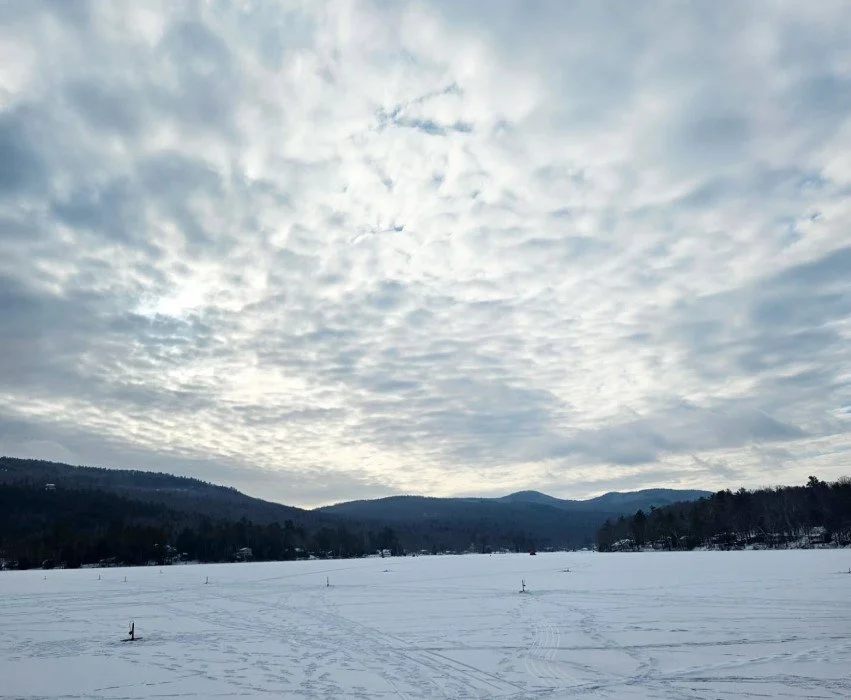
As if that weren’t enough, we’re also staring down record-breaking Arctic temperatures this weekend, followed by a major snowstorm. Taken together, it’s a lot
It reminds me that life moves in cycles, and not all of them are gentle. Some stretches are simply hard. Winter is hard, but it’s a kind of hard with an end date—you know, even on the bleakest day, that it will not last forever. Other difficult periods are less defined. They linger. They blur into normalcy. Sometimes you don’t even realize how heavy they were until you’re standing on the other side of them. I look back on COVID now and think, wow—that was hard, even though at the time it just felt like survival.
Nursing school is one of those demanding chapters. I’m old enough to know there will always be another challenge waiting beyond it. Still, I imagine finishing school as stepping out of a cluttered, chaotic room. The mess will still need attention—but at least I’ll be standing in clearer air, able to see what comes next.
Nature planned Imbolc at just the right time. The coldest, harshest part of the year in the northern hemisphere. And yet—here comes the gift of light. It’s a subtle offering, easily missed if you’re only measuring the day by temperature. But it’s there, if you know how to look: the days stretching just a little longer, warmth returning to the sun’s touch, its angle shifting ever so slightly. Birds flit and sing. Icicles on the south-facing eaves drip at noon. Small, stubborn signs of what’s ahead.
These are reminders that even the hardest times contain the seeds of what follows.
So I am choosing hope. I am choosing to believe that this moment—however heavy—will not stand forever. That light and kindness endure. That spring is not naïve optimism, but a certainty written into the natural world.
It is coming. And until then, we keep going.
On the Blog


Follow the Mabon House Adventures

Celebrating Imbolc: The Goddess Brigid
This post may include affiliate links and I may earn a small commission from qualifying purchases. Mabon House only features products that I believe in and use myself or that I believe my readers would enjoy. Thank you!
Imbolc, celebrated each year on February 1st, marks the midpoint of Winter. In the Wheel of the Year, Imbolc is a cross-quarter day, falling exactly between Yule and Ostara. heralding the first signs of spring and the renewal of life. At the heart of this festival stands the Celtic goddess Brigid, a figure of immense influence in Irish-Celtic mythology. Unlike many other Celtic deities who were revered regionally or in specific tribes, Brigid’s worship was widespread among the Irish-Celtic people, reflecting her profound importance in their spiritual and daily lives.
Brigid: Goddess of Many Roles
Brigid was a multifaceted goddess, embodying aspects of learning, poetry, healing, fertility, and the smith arts. This wide array of roles positioned her as a key figure in Celtic society, where creativity, craftsmanship, and the ability to sustain life were deeply valued. She was seen as a bringer of civilization, credited with fostering skills and knowledge that uplifted her people. In many ways, Brigid was not just a goddess but a symbol of human ingenuity and resilience.
Her association with poetry and learning highlights her role as a muse of inspiration. In Celtic culture, poets, known as “filí,” held a revered position, serving as keepers of history, tradition, and lore. Brigid’s connection to them reinforces her importance in preserving and nurturing cultural identity. Similarly, her link to healing and fertility underscores her role as a life-giver and nurturer. For a largely agrarian society, fertility was a vital concern, and Brigid’s blessings were sought to ensure healthy crops, livestock, and families. Her domain over the smith arts further underscores her association with creation and transformation, as blacksmiths were seen as alchemists who shaped raw materials into tools and treasures.
You may also enjoy: Brigid: History, Mystery, and Magick of the Celtic Goddess - Audio Book
Imbolc: A Festival of Renewal
Imbolc, which translates to "in the belly" or "ewe’s milk," falls midway between the winter solstice and the spring equinox. This liminal time marks the stirring of life beneath the frozen ground, as lambs are born and the days grow visibly longer. For the ancient Celts, this was a time of hope and preparation for the coming spring. It is no surprise, then, that Brigid, a goddess so deeply tied to life and renewal, was celebrated during this festival.
Early Imbolc traditions revolved around fire and light, symbolizing warmth, inspiration, and the return of the sun. Bonfires were lit to honor Brigid and to encourage the thawing of the frozen land. These flames were seen not only as physical warmth but also as a representation of Brigid’s transformative power—her ability to ignite creativity, bring healing, and usher in new life. Homes were often adorned with candles, further invoking her blessings.
Another key tradition involved the crafting of Brigid’s Cross, a distinctive four-armed cross woven from rushes or straw. These crosses were hung above doorways and windows to bless and protect homes from harm. The cross’s design, resembling both a sun wheel and a symbol of the earth’s cycles, embodies the interconnectedness of Brigid’s domains.
Weather divination was another prominent feature of Imbolc. Ancient Celts believed that the day’s weather could predict the arrival of spring. One custom involved listening for the lark’s song; if the bird sang, it was a sign that spring would come early, symbolizing the return of the God to the Goddess in Celtic mythology. This practice bears a striking resemblance to the modern tradition of Groundhog Day, where a groundhog’s behavior is believed to forecast the season’s change.
Brigid’s Christianization
Like many pagan deities, Brigid’s influence endured even as Christianity spread through Ireland. Rather than eradicating her worship, the Christian church incorporated her into its traditions, canonizing her as Saint Brigid of Kildare. This syncretism allowed her cult to persist, albeit in a transformed guise. Saint Brigid’s feast day, celebrated on February 1st, aligns with Imbolc, further blending pagan and Christian practices.
As Saint Brigid, she was credited with miracles and acts of compassion that mirrored her goddess attributes. Her shrine in Kildare, maintained by 19 nuns, echoed the all-female priesthood that attended the goddess Brigid in earlier traditions. The continuity of these rituals underscores the enduring reverence for Brigid and her deep-rooted significance in Irish culture.
The Legacy of Brigid and Imbolc
Today, Brigid’s influence remains strong among modern pagans, particularly those who observe Celtic traditions or follow the Wheel of the Year. Imbolc is celebrated as a time of renewal, creativity, and dedication to personal growth. Rituals often include lighting candles, making Brigid’s Crosses, and setting intentions for the year ahead. For many, it is also a time to honor Brigid’s legacy by engaging in creative pursuits, acts of healing, or practices that nurture fertility and abundance.
Brigid’s dual identity as both a goddess and a saint highlights the resilience of cultural traditions. She serves as a bridge between the old and the new, a testament to the power of adaptation and continuity. Whether celebrated as a goddess of poetry and fire or venerated as a saint of miracles, Brigid embodies the enduring human desire for inspiration, transformation, and hope.
As we approach Imbolc, we are invited to reflect on the themes that Brigid represents: the spark of creativity, the warmth of community, and the promise of renewal. In lighting a candle or crafting a Brigid’s Cross, we connect not only to ancient traditions but also to the timeless cycles of nature and the ever-present potential for growth and change. Brigid’s story reminds us that even in the darkest of winters, the light of inspiration and life is always waiting to return.
Recommended Reading & Listening
Brigid: History, Mystery, and Magick of the Celtic Goddess - Audio Book
On the Blog

Follow The Mabon House Adventure




The content provided above was developed in collaboration with ChatGPT, an AI language model by OpenAI. The initial ideas and concepts for the piece were provided by me, and ChatGPT assisted in organizing, formatting, and refining these ideas into the final written post. While the AI contributed to the structure and clarity of the content, the core ideas and creative direction remain my own.
It’s Okay to Just Rest in January
This post may include affiliate links and I may earn a small commission from qualifying purchases. Mabon House only features products that I believe in and use myself or that I believe my readers would enjoy. Thank you!
Embracing the Stillness of January
I hope this finds you well and safe. Here in Western Maine, we’re in the midst of a cold snap. I’ve had a few days off and spent them tending my woodstove and relaxing. My nursing school clinicals kick off this week, marking the start of what will be a very rigorous year. I’m feeling both nervous and excited. But as I look around at the quiet of this season, I’m reminded of something important: it’s okay to just rest in January.
The Beauty of Winter’s Quiet
Outside, winter is on full display in all its icy beauty. The sky alternates between a brilliant blue and layers of white and gray clouds. The friendly, puffy clouds of summer have been replaced by sweeping, gray-blue stretches, giving everything a quiet, muted tone. The trees in my gardens stand in solemn observance of the season. Yesterday, a cold wind blew through, making the trees creak and sway. Ice and snow packed tightly on the ground crunch underfoot. Everything feels slower, quieter, and still—a perfect reflection of what January invites us to embrace.
Why January Isn’t Always the Best Time for Resolutions
I’ve always marveled at people who dive headfirst into new routines at the start of the year. The energy to set ambitious resolutions, to jump straight into productivity, can feel at odds with the rhythm of winter. For me, this time of year feels more like an opportunity to refresh my spaces, tidy up, and start thinking about the coming growing season—but not to dive into action just yet. January calls for something different: rest and reflection.
The Influence of Capitalism on New Year’s Resolutions
The push for New Year’s resolutions often feels tied to the demands of capitalism. We’re encouraged to "optimize" ourselves—whether through gym memberships, productivity planners, or a slew of other purchases aimed at self-improvement. But what if we stepped back and instead tuned into the natural rhythms of the Wheel of the Year? Winter is a season of stillness and recovery, not a time for forcing ourselves into constant action. If resolutions don’t resonate with you, consider an alternative: setting intentions. Unlike rigid goals, intentions are fluid and allow space for growth over time. I find journaling to be one of the best ways to hone in on what I want to be, do, and have in life. This design is one of my favorites.
The Wheel of the Year and the Restful Energy of Winter
The lead-up to Imbolc, the midway point between winter solstice and spring equinox, reminds us that we are still in the heart of winter. While the days are slowly growing longer, this is a season of quiet preparation, of gathering strength for what’s to come. Even with work and school on my plate, I try to honor this time as a season of rest as much as I can.
Alternatives to Resolutions: Setting Intentions
There’s so much pressure in our culture to hit the ground running at the start of a new year. We’re encouraged to set goals, make plans, and start fresh. And while that works for some, it’s okay if January feels more like a time to pause and breathe. Resting isn’t laziness; it’s a necessary part of the cycle. It’s how we recharge so we can meet the demands of spring when it arrives. Winter gives us permission to slow down, reflect, and dream. The Year of the Witch by Temperance Alden is a great read for ideas on how to approach the calendar year through the lens of seasonality and the Wheel of the Year.
Honor the Season in Your Own Way
So if you’ve been feeling the weight of expectations to "do more" or "be better" right now, give yourself permission to let those pressures go. Rest is a gift we can give ourselves—and it’s one that aligns perfectly with the season.
What does January and midwinter look like for you? Are you leaning into the stillness, or are you feeling pulled to action? Wherever you find yourself, know that it’s okay to honor this time in a way that feels right for you.
On The Blog
Follow The Mabon House Adventures