A Note From Last Spring
I was flipping through an old notebook and found this entry - written in March 2025 (10 months ago). I never sent this letter out through Mabon House, but felt like it was worth sharing now, almost a year later. I hope you enjoy it.
Hello friends,
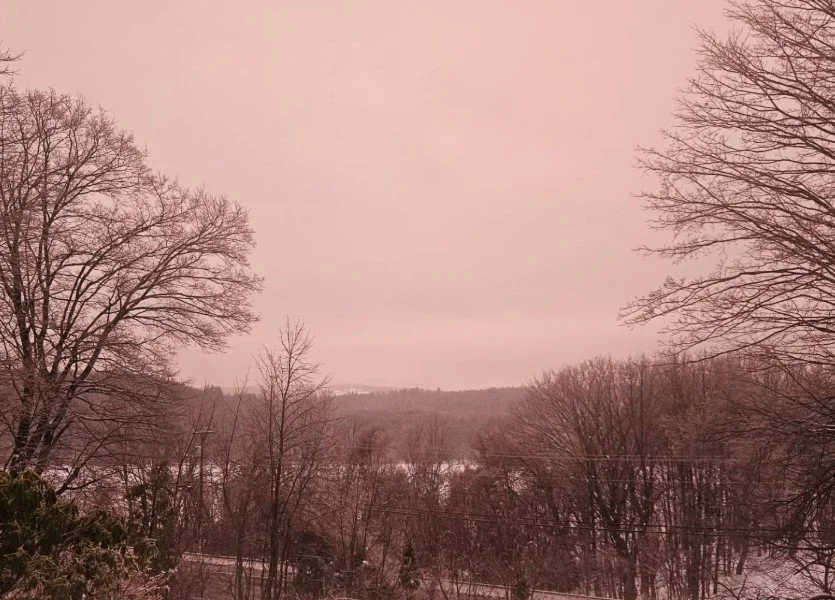
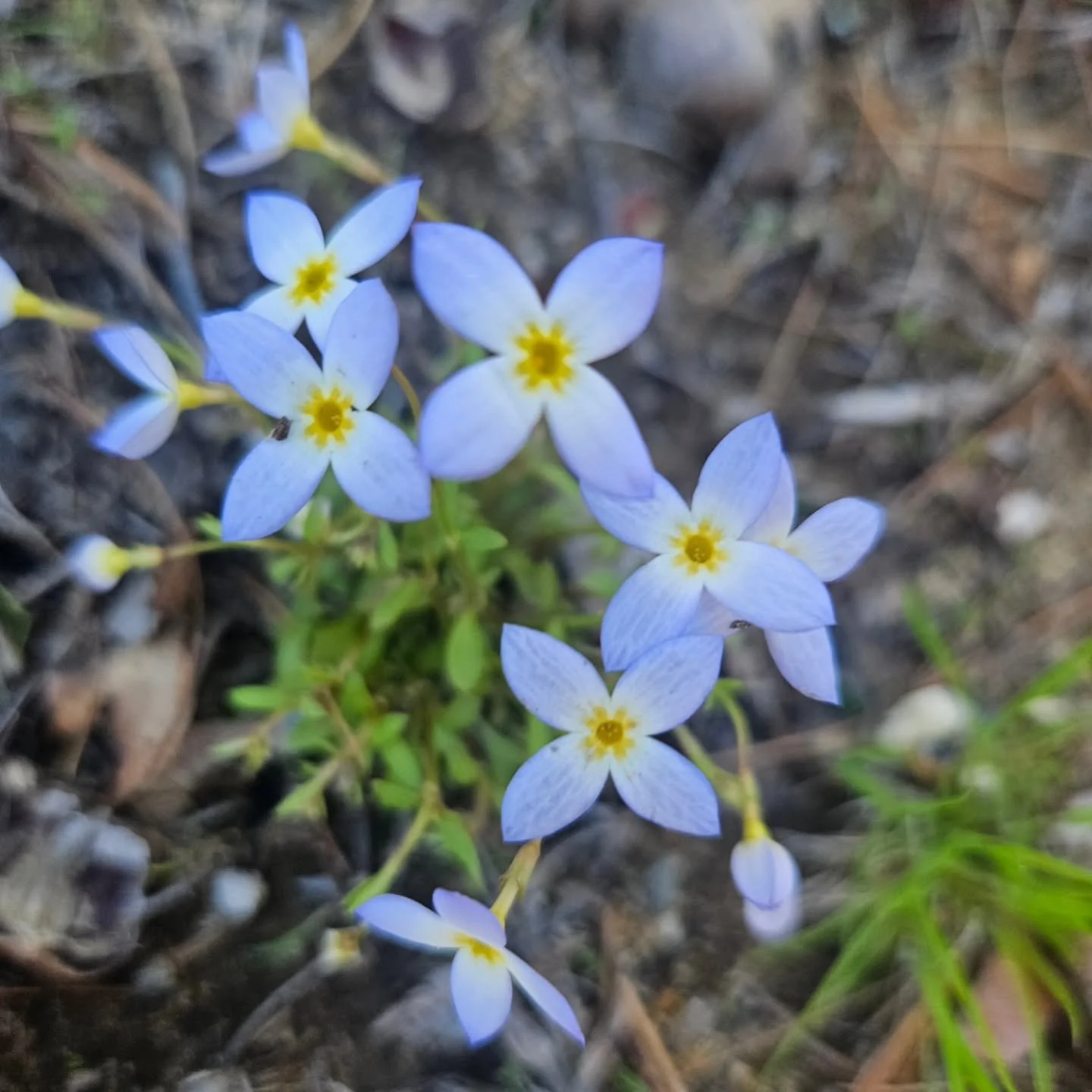
I hope this finds you well and safe. Spring (2025) arrived early this year in Western Maine. Today it’s in the 40s and 50s with full sun, and it feels absolutely luxurious after the cold of January and February. I took a break from studying to go outside for a bit—picking up fallen branches for next season’s kindling, surveying my lower garden hillside. It’s covered in a thick layer of brown leaves, still glossy with ice. Another week of sunshine and they’ll be ready to rake up, making room for this year’s grasses and flowers.
Even with the beautiful weather, there’s no denying that early spring in Maine is not pretty. Half‑melted snow, blackened by dirt and wood ash, clings to the ground. Snowbanks look tired and worn down. Piles of wood ash—hastily dumped during the coldest parts of winter and quickly covered by snow—reemerge, a reminder of how desperate those nights were to stay warm. A tiny river runs down my driveway as the snow melts, carrying wood ash, dirt, and the flotsam and jetsam of last year’s gardens.
Springtime is not always beautiful, but it is always necessary. Anyone who has witnessed a birth knows it’s a messy business—beautiful, yes, but messy. Early spring is when the line between seasons blurs, and that feels a lot like my life right now. I’m in the pangs of a kind of rebirth, surrounded by mess: tangled emotions, a neglected house, and a life dominated by nursing school. I knew school would be a huge commitment, and it has taken up every corner of my life. I don’t regret starting, but another eleven months of this feels —at least in that moment—disheartening.
The birds have returned. A soft coo from a mourning dove, hidden somewhere in the trees. The woodstove is still going, taking the chill out of mornings and evenings. Outside, spring is brown and muddy. There are no leaves yet to break up the sun—just matted grass, dead leaves, fallen branches. Inside, I’m trying to accept this season of my life: hard, busy, and necessary. And still, if I’m honest, I want to skip ahead.
I’ve had a lot of regrets lately. A fifteen‑year relationship ended. Would I have been better off alone? I put my writing on the back burner to go to nursing school—was that the right choice? I spent so much time writing and blogging. Was it a good use of time? What do I even have to show for it?
A good friend and mentor offered some wisdom when I told her I felt like I’d wasted so much time trying—and failing—to find happiness. “Lorri,” she said, “you are young. You have so much life left.”
There is void in my life that was once filled with raising children and spending time with my significant other. The absence of both is something I feel acutely. I know that some endings are for the best, but grief doesn’t always listen to logic. It comes in waves, often accompanied by regret—the least helpful of emotions. Lately, though, I’ve been able to sit with these feelings and let them pass instead of trying to outrun them- my M.O. for most of my life. I feel apprehensive about the future. Even though I’ve always been fairly independent, I feel untethered now: no parents, no partner, no kids at home to raise. It’s just me.
Of course, I’m being a little dramatic. My kids may be out of the nest, but we are a close knit bunch. I have family and friends checking in on me, reminding me daily that I am loved beyond measure.
Springtime is messy and kind of ugly. That doesn’t mean it shouldn’t be appreciated. We don’t always have to seek beauty to find meaning. Sometimes the work is simply to sit in the muck for a while. I know these feelings will pass. My heart will continue to heal. The stress of school will eventually become a memory. And on the other side of this season, a new adventure is waiting.
—
Author’s Note
This was written in March 2025. I am still in nursing school, but with only a few weeks left. About six months after my breakup, I met someone who reminded me that I am still capable of great love. And most days I am no longer carrying the burden of regret - I feel as thought this year, as hard as it has been - was necessary - just like springtime in Maine. I’ve come out stronger and more resilient, but also softer and happier.
So, friends—if you’re going through it, or even if you’re just coasting along ho‑hum—consider this a reminder: sometimes the best thing you can do is keep going and trust that what you seek will find you.
On the Blog



Follow the Mabon House Adventures
My To-Do List Will Never Be Done - And That’s Okay
Last week, I wrote about chasing a feeling and how life can feel perpetually just out of reach. This week, I want to explore the idea of completion - of checking off every box on your to-do list. Because let’s be honest— as a society we are obsessed with it. There are whole platforms like Notion, Trello, and Microsoft Planner dedicated to helping people get stuff done.
My toxic trait is making a completely unhinged to-do list for myself and then feeling frustrated when I cross off 2-3 items at most. Sure, there’s something cathartic about ticking a box and the deep satisfaction of finishing something. But lately, I’ve noticed my to-do lists never seem to shrink. In fact, they only seem longer. And usually, this correlates with an uptick in stress in my life.
I think know stress drives me to make lists as a way to establish some semblance of control. But the lists often become useless because I never come close to finishing them. Here’s the thing: if you are like me, your to-do lists are never finished. There’s always one lurking in the shadows, waiting to steal your Saturday morning or swallow your after-work routine—all with the promise that this list will finally get you organized and get your sh!t together.
As Jack Nicholson says in The Witches of Eastwick—one of my all-time favorite movies—“You wash the dishes, there’s more to wash tomorrow.” Sure, in the movie he’s literally the devil trying to convince Cher to eschew her domestic responsibilities and sleep over, but he’s not wrong about the dishes. Some things in life will never be done. Yet we tackle them like they can be. And that’s how frustration and overwhelm creep in.
I enjoy a clean house, but not at the expense of my limited free time and energy. At some point, it’s okay to say: this is good enough. The floors don’t need to sparkle, the laundry doesn’t need to be folded immediately, and the dishes can wait until morning. The same goes for your to-do list. It’s okay to cap it at two or three things instead of trying to do everything in a single day. Doing a few things well—and then resting—often serves us far better than exhausting ourselves in the pursuit of “caught up,” a state that rarely exists anyway.
As we start 2026, many people start plotting the whole new year - new me. If this is you and you’ve been feeling overwhelmed by everything you think you should be tackling this year, I’m here to say—put down the pen and paper, close out your Notes app, and take a beat. Ask yourself: what’s driving the need to accomplish everything right now?
To help, I have my Let It Go List, which I first shared back in 2022. It’s a simple tool that helps you sift through all the things floating around in your brain, and categorize them as important or something to just let go - at least for now. While my priorities have shifted since creating my Let It Go List, much of the advice still rings true. Check out the full post and grab the free download here.
How long is your to-do list? Are you going to let some things go in 2026?
2026: Are We All Just Chasing a Feeling?
As we enter the deepest part of winter in the northern hemisphere, I find it’s a good time to slow down and take stock. I’ve been reviewing my finances, my work and school schedules, and the long list of upcoming tasks. I’ve also been plotting a fun—but frugal—2026.
My post–nursing school bucket list includes:
Binge-watching PBS period pieces (Wolf Hall!)
Enjoying leisurely lunches with friends and family
Planning an actual vacation where I leave the state of Maine—not just a few days off from classes
Organizing my cupboards (for reasons I can’t fully explain, I’ve been longing to do this all year)
Trying new seasonal recipes
Creating a new painting every month
Reading a new book every month (recommendations welcome)
But the thing I’m most looking forward to in 2026 is simplifying my life and no longer having to balance work and school. I long for the days when I’m not studying, or thinking about studying, or feeling guilty that I haven’t studied enough. The closer I get to the end of my nursing program, the more I fantasize about the glorious, simple, cottage-core life waiting for me on the other side.
And then, all at once, I have to remind myself that what I have right now is good. That it’s okay to be happy, content, even joyful in the present, even if life feels messy. I don’t need to delay my happiness until some mythical endpoint where all my stressors politely pack up and leave me alone among my flower beds and journals. Because that day is not coming.
There will always be something to worry or fret about. At least for me—because that’s how I’m wired. Maybe it’s because I’m an eldest daughter, granddaughter, and great-granddaughter (the trifecta). Or maybe my tendency to overthink stems from past trauma I’m only now able to start processing.
Whatever the reason, I’ve spun this tale in my head before: Life will be great when… That way of thinking is deeply ingrained in my psyche—I could walk it blindfolded. But I’m old enough now to know that I cling to bright, shiny futures not because they’re true, but because they’re familiar. And familiarity feels safe.
It’s easy to outsource our joy to the future. To hide in planning mode when what we really need is action. As long as we idealize what could be, we miss out on what is. And friends, I don’t know about you, but I’m ready to let go of that old way of thinking.
If you want to simplify your life, it probably requires action—not just thoughts. Want your home to be easier to care for? You likely need to declutter. Want to get your finances in order? You have to sit down and make a budget. Tired of feeling like you’re spinning your wheels? You may need to be honest with yourself about what’s working, a little less honest about what you wish were working, and move accordingly.
For me, the life I long for often feels perpetually just out of reach—I can almost brush it with my fingertips. And while I’ve gotten better at taking action and rethinking what happiness and peace actually look like, there are still days when I feel frustrated that I’m grappling with the same old problems. But maybe that’s just life. Isn’t there always something—or someone—that becomes a thorn in your side? If I’m not careful, I could easily fritter away the rest of my days waiting for perfection.
And maybe the work, now, is this: learning to stop waiting. To stop treating peace like a reward I’ll earn later, once I’ve finished becoming who I think I’m supposed to be. Maybe a simpler life doesn’t arrive all at once on the other side of an ending, but in small, imperfect choices made right here—while things are unfinished, while I’m still learning, while the cupboards are half-organized and the future remains unknowable. Maybe this moment, messy and incomplete as it is, is already asking me to stay.
Do you ever feel like you are chasing a life that always feels out of reach? What helps you stay grounded in the present, while still looking forward to the future?