
Returning to the Mat
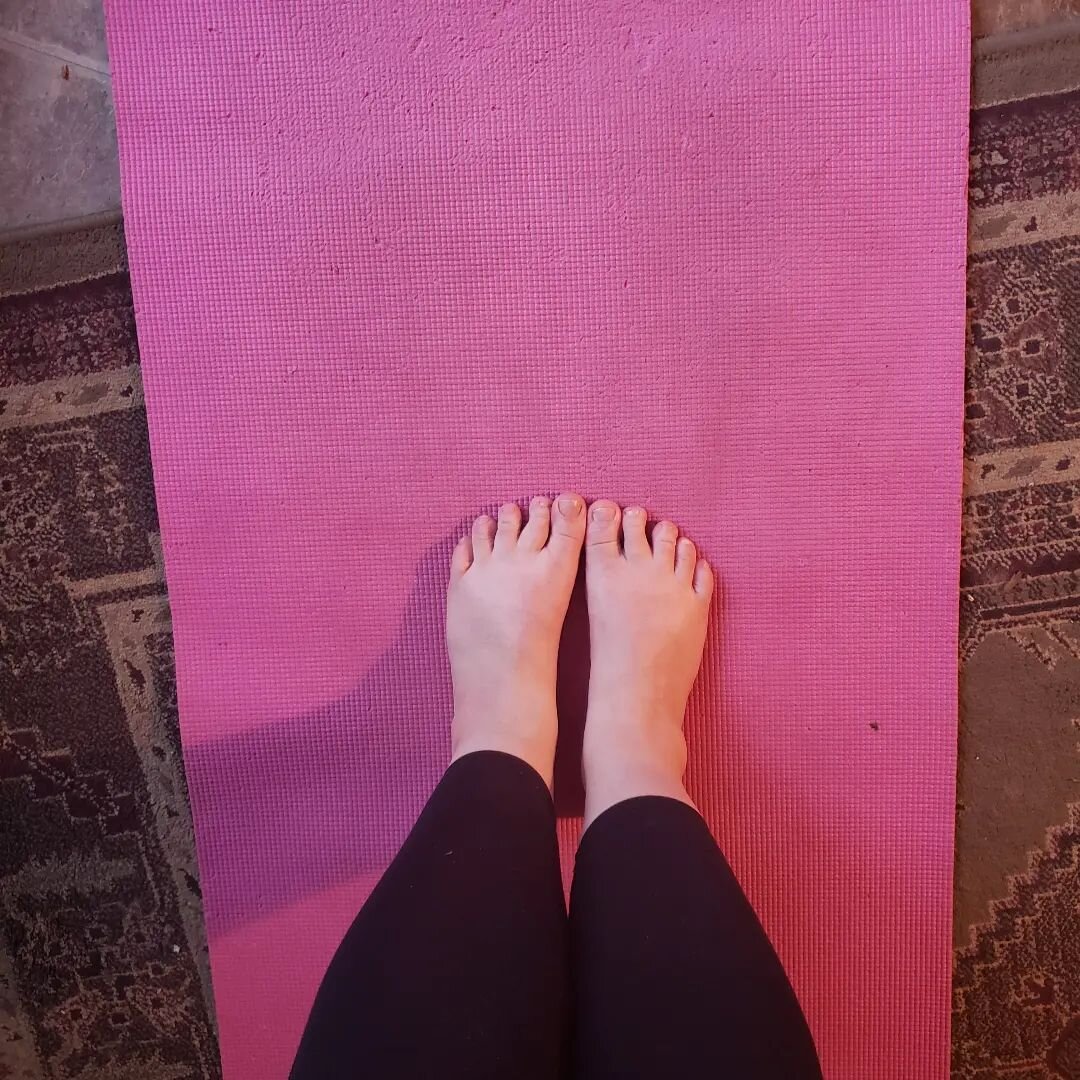
A few weeks ago I shared on Instagram that I’ve picked up my yoga practice, after a several year hiatus. I’ve done yoga off and on for nearly a decade, but it’s been four years or so since I really practiced regularly. So for the past two weeks I’ve committed to doing a Yoga With Adrienne video after work.
The first practice back on the mat was hard. I wanted to cry because I felt so weak and heavy at the same time. But by the end of the practice my mind felt clearer, like someone came in and cleaned out the cobwebs. All the problems I had brought with me to the mat felt lighter and more manageable.
Yoga is magical like that.
As I like to keep things real around here, I feel compelled to share that I am not a yogi. I have never enjoyed exercise, formal or otherwise. As a kid, I would be the first one to tap out during a game of tag at recess. I only started exercising as an adult because I wanted to lose weight (thank you diet culture). Physical activity was just another chore on my to-do list. Something to be checked off and never truly enjoyed.
Even though regular exercise had a profound effect on my mental health, I would get frustrated when the scale didn’t budge. That frustration would turn to anger and then sadness and any exercise routine would fade away. Until l I started another diet / lifestyle change / wellness journey. And the cycle would start all over again. Does this sound familiar to anyone?
I walked away from diet culture in 2020, with the help of this book on Intuitive Eating. Anyone who has actively rejected western diet culture knows that changing the way you view your body, food and your overall place in society takes time. And so I am still very much in the process of untangling the benefits of exercise for my well being from the need to look a certain way in order to be more acceptable.
In short, for the past couple of years whenever I’d start trying exercise regularly, my lizard brain would be like “She’s Going on A Diet! Cue the binge eating/ self loathing cycle!”
After some big ups and downs, I have finally (I think) landed in a place of peace with exercise and physical activity. I do yoga, talk walks, and occasionally go hiking, because it makes me feel good. After being mostly sedentary during the pandemic, I realized how much better I feel when I get a daily dose of exercise, even if it is just a quick lunch time walk around my office parking lot.
My decision to pick up my yoga practice more formally now was driven 100% by a desire to improve my mental and physical health. I think this is just yet another benefit of moving from Maiden to Mother to Crone. I recognize the beauty and strength of who I am right now, rather than pining for some future version of myself. And for me, returning to the mat is one way I can honor my body and my spirit.
How do you like to take care of yourself?
Hey friends - just a reminder, I am not a licensed clinical anything and I’m just an awesome middle aged mom sharing my own personal story. None of this should be taken as medical advice or suggestions. If you struggle with health issues or are seeking medical advice, please talk with your licensed medical provider.
Follow the Adventures

Mabon House - A Year in Review
While the Wheel of the Year is just getting started, it’s hard to believe that it is already the end of 2022. When I think about where I was at this time last year, I can’t believe all the progress I’ve made - both personally and here at Mabon House. As some longtime readers may recall, 2021 was a bit of a hot mess. I’d write a random blog post or newsletter and then lay dormant for weeks on end. Feeling burnt out and exhausted, I almost closed Mabon House permanently last December. Can you imagine?
As I sat in my living room trying to decide what to do, I ended up writing this letter to the community. In it I was radically honest about my struggles for the first time. I shared how I loved writing and creating for Mabon House, but struggled to balance it with the rest of my life and responsibilities. I also had a good degree of imposter syndrome. And while I didn’t want to quit writing, I knew something had to change.
I will never forget hitting send on that letter. I had no idea if anyone would even care what I had to say. So, imagine my utter shock and genuine happiness when so many folks wrote right back to me - with empathy, humor, and understanding. And for the first time I realized that I had, quite on accident, created this amazing community of like-minded souls.
So from that point on I made a deal with myself that I would write to you all every week, even if I felt like I had nothing special to share. Because I realized that just showing up was enough for many folks.
And I am pleased to share that I’ve sent a Mabon House Letter every week this year - 48 letters so far. While 2022 has definitely had its moments, writing for this community is one the highlights of my year. And connecting with so many of you on Instagram has been an added bonus! I am excited to see what 2023 brings all of us!
So if you are new here, welcome. And if you’ve been here from the beginning, Thank You for sticking with me!
Celtic Full Moon Names
The cycles of the moon have been followed by people for centuries. Monthly moons helped guide planting seasons, celebrations and religious observances. Full moon names were common among ancient peoples all over the world. Here is a list of common full moon names used by the Ancient Celtic people in Europe.
January
According to Celtic tradition, the January full moon is known as the Quiet Moon. The name Quiet Moon is likely in reference to the quiet season of rest before the beginning of the harvest season. The January full moon is also known as the Wolf Moon or the Cold Moon in other cultures. The Quiet Moon is a good time for connecting with your higher spiritual power and reflecting inward. Now is the time to rest and save your energy for the busy seasons ahead.
February
According to Celtic tradition, the February full moon is known as the Moon of Ice. It is also known as the Hunger Moon, Snow Moon and Quickening moon in other cultures. This is the season of Imbolc and a good time to think about what you would like to achieve during the coming year. It is also a good time to set intentions around how you want to feel during the coming year, as well.
March
According to Celtic tradition, the March full moon is known as the Seed Moon. It is also known as the Wind Moon, Storm Moon or the Worm Moon. This is the season of Ostara, celebrating the start of springtime. March is a good time to start planting seeds - both literally and figuratively, in order to bring new things into your life.
April
According to Celtic tradition, the April full moon is known as the Growing Moon or the Pink Moon. It is the season of love and conception and is a good time to focus on romantic relationships, conceiving a child, and taking continued actions toward your goals. It would also represent the beginning of growth of the harvest in Ancient Celtic communities.
May
The May full moon is known as the Flower Moon. As spring blossoms more fully in May, now is a good time to look at tending to your own life, including relationships, your career and your self care. Take action to make sure the seeds you planted continue to grow and thrive.
June
The June full moon was known to the ancient Celts as the Mead Moon or the Horse Moon. It was believed that a newly married couple should drink mead for one full moon cycle to promote good health, prosperity and fertility. June is a time to celebrate the longest day of the year with Litha and the Summer Equinox. Spend time outside, enjoying the long days and abundant sunshine.
July
The July full moon was known to the ancient Celts as the Claiming Moon or Horse Moon. Claiming Moon is likely derived from some sort of early legal system, similar to August’s Dispute Moon. July is traditionally the warmest month of the year in the Northern Hemisphere and as such is a good time to relax, meditate and reflect on your life. It is also a good time to think about how you can bring more positive things into your life.
August
The August full moon was known to the ancient Celts as the Grain Moon or the Dispute Moon. August was the time of the first harvest of the year, the Celtic and to celebrate the occasion with feasts and festivals. It was also a time to resolve disputes between neighbors. This tradition of summertime legalese continued well into the 19th Century in different parts of Britain, where August 1st (aka Lughnasadh & Lammas) was a traditional time to collect rent and pay workers. Today the August Full Moon is a time to celebrate all your work and progress during the year, knowing that you are also prepared for the months ahead.
September
The ancient Celts referred to the September full moon as the Singing Moon, Harvest Moon, or Wine Moon. Singing moon may refer to celtic rituals that included singing, along with other celebrations of the autumn equinox. It is a time to celebrate Mabon and the balance of light and dark. As the Wheel of the Year comes to an end it is also a good time to give thanks for all the blessings in your life.
October
Marking the end of the growing season, ancient Celts referred to the October full moon as the Harvest Moon, Seed Fall Moon, or Hunter's Moon. Aligning with the celebration of Samhain, October is a good time to honor loved ones who have passed on. It is also a good time to do spiritual and physical house cleaning, getting rid of what doesn't serve you in the coming year.
November
The November full moon was known by the ancient Celts as the Dark Moon or Oak Moon. In the northern hemisphere, the November full moon falls among the shortest days of the year. The first full moon in the Wheel of the Year, November is a good time to cultivate healthy habits and continue to let go of negative energy.
December
The December full moon is known as the Cold Moon, Singing Moon or Wolf Moon by ancient Celts. It is a time to celebrate Yule or the Winter Solstice and the return of longer days. Spend time with family and friends and celebrate the beginning of winter.
References & Recommended Reading
Follow the Mabon House Adventures