
How to Set Up an Altar for the Wheel of the Year
This post may include affiliate links and I may earn a small commission from qualifying purchases. Mabon House only features products that I believe in and use myself or that I believe my readers would enjoy. Thank you!
The Wheel of the Year marks the cyclical nature of life, death, and rebirth through the changing seasons. Many different nature-based spiritual paths incorporate the Wheel of the Year into their practice, including Wiccans and Witches. As the interest in neo-paganism and other types of nature-based spirituality grows, more people are aligning their own practice with rhythms of nature, versus a patriarchal religious calendar.
One way to celebrate the Wheel of the Year all year long is by setting up an altar. An altar is a designated and sacred space where individuals or communities set up symbolic items, objects, and offerings to connect with their spiritual beliefs, practices, or deities. It serves as a focal point for meditation, prayer, rituals, and reflection. Altars can be personalized with meaningful elements that represent the practitioner's spiritual path, intentions, and the energies they wish to invoke.
There are no right or wrong ways to set up an altar for the Wheel of the Year. Ultimately your altar should be a reflection what you value and want to focus on as part of your own practice. And it shouldn’t feel like a chore to set up or maintain. If you opt to not update your altar from one sabbat to the next, that is okay. It is the intention that matters the most.
Here are some general guidelines and steps, as well as ideas for capturing the essence of each season.
Step 1: Choose a Dedicated Space
Select a space in your home that resonates with you. It could be a corner of your bedroom, a windowsill, or a small table. This dedicated area will be the focal point of your connection with the Wheel of the Year's energies.
Step 2: Gather Your Materials
Collect items that represent the seasons and their corresponding symbols. Some common symbols to consider include:
Candles: Each season has its own color. For example, green for Beltane, orange for Samhain, or white for Imbolc. Light a candle of the appropriate color to symbolize the current season.
Crystals: Select crystals associated with the seasons. For example, citrine for Litha and Lughnasadh, Carnelian for Mabon, and amber or peridot for Mabon.
Nature: Incorporate items from nature, such as leaves, flowers, pinecones, and seashells. These represent the changing landscape of the Wheel of the Year.
Seasonal Symbols: Use symbols that represent the seasons and their corresponding celebrations. For instance, eggs and rabbits for Ostara (spring equinox), sun symbols for Litha (summer solstice), acorns and apples for Mabon (autumn equinox), and evergreen branches for Yule (winter solstice).
Incense and Herbs: Burn incense or use dried herbs that correspond to the seasons. Lavender for spring, frankincense for summer, sage for autumn, and pine for winter.
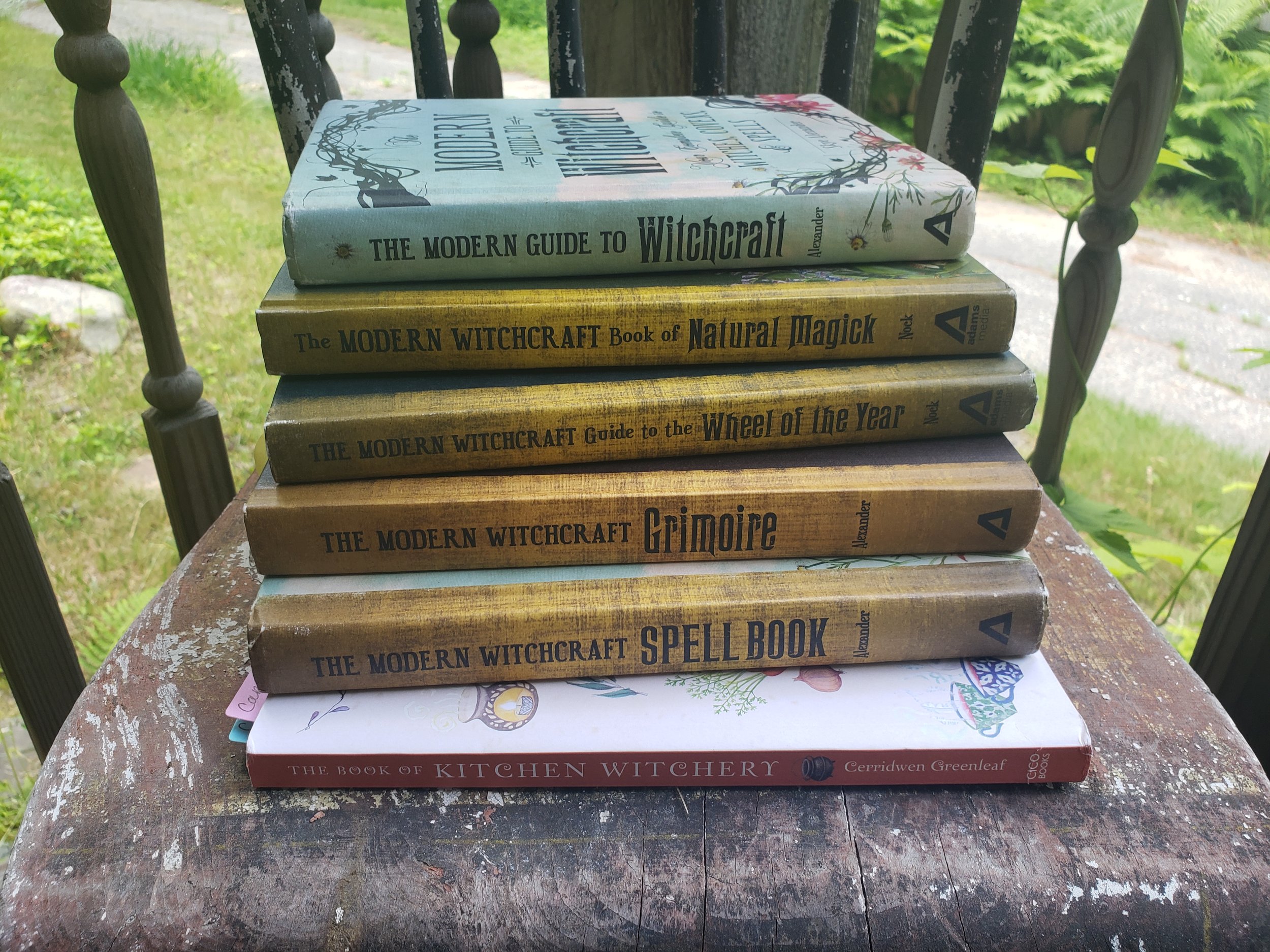
Elements: Many traditional altars in Witchcraft incorporate the four elements of Air, Earth, Fire and Water. This could look like a cup (or chalice if you are feeling fancy) of water, a candle for fire, a dish of salt for earth and a feather for air. Each element represents different properties. For example water offers cleansing properties. So if you’re focus for the season is on letting go of negative beliefs or habits, you may want to include water as part of your altar. Author Skye Alexander offers an excellent overview of the four elements and how to set up an altar in The Modern Guide to Witchcraft. This blog post on Grove & Grotto also gives an good overview.
Deities: Each Wheel of the Year is associated with a different deity. You may want to incorporate a symbol of the god or goddess of the season into your altar, such as a Brigid’s Cross for Imbolc or Sun for Sol at Litha.
Step 3: Arrange Your Altar
Arrange your materials in a way that feels balanced and harmonious to you. If you opt to use the four elements of Air, Earth, Fire and Water, you can use the cardinal directions as a guide:
Air = East
Earth = North
Fire = South
Water = West
You could also create a circular arrangement to symbolize the cyclical nature of the Wheel of the Year. Don’t be afraid to play around with the composition until you find something that feels right for you.
Step 4: Create Seasonal Displays
Rotate your altar displays according to the eight festivals of the Wheel of the Year:
Imbolc: Represent the awakening of the earth with candles, white flowers, and a symbol of the young sun.
Ostara: Embrace the fertility and rebirth of spring with pastel colors, eggs, and fresh flowers.
Beltane: Celebrate the coming of summer with brightly colored ribbons, a maypole, and flowers.
Litha: Honor the sun's peak with sun symbols, gold accents, and vibrant colors.
Lammas/Lughnasadh: Embrace the harvest season with grains, bread, and fruits.
Mabon: Reflect on balance during the autumnal equinox with leaves, gourds, and warm colors.
Samhain: Connect with the spirit world by incorporating images of ancestors, pumpkins, and dark colors.
Yule: Welcome the return of light during the winter solstice with evergreens, ornaments, and white decorations.
Again, if redoing your alter every six weeks feels like too much, you don’t have to do it. You can set up an altar and leave it. You can set it up for your favorite Sabbat and then take it down. Do what feels right for where you are at in life and your spiritual path.
Step 5: Reflect and Ask
Once your altar is set up, set aside some time to meditate and reflect. You may also opt to do spell work / manifestation work at your altar, to set intentions or ask for clarity and guiadance. The Modern Witchcraft Spell Book has excellent and easy spells for beginners.
Setting up an altar for the Wheel of the Year is a beautiful way to connect with the rhythms of nature and the spiritual essence of each season. By incorporating colors, symbols, and elements that resonate with you, you'll create a meaningful space that serves as a reminder of the ever-turning wheel of life. This practice can help you attune to the energies of the Earth and find deeper spiritual connections throughout the year.
Follow the Mabon House Adventures



A Book Review of "Modern Guide to Witchcraft" by Skye Alexander
This post may include affiliate links* and I may earn a small commission from qualifying purchases. Mabon House only features products that I believe in and use myself or that I believe my readers would enjoy. Thank you!
One of my favorite books for learning about the Wheel of the Year and witchcraft is the Modern Guide to Witchcraft by Skye Alexander. This book explores contemporary witchcraft and is ideal for both beginners and seasoned practitioners. Alexander provides a comprehensive guide for those seeking to learn more about modern witchcraft. She provides information about the history of witchcraft, alongside hands-on activities and practical advice for the modern day witch.
In this book, Alexander bridges the gap between ancient traditions and the modern world, making it an ideal resource for those looking to incorporate witchcraft into their daily lives. She begins by explaining the history of witchcraft, dispelling common misconceptions and stigmas that have long been associated with witchcraft. I really appreciated that emphasis that the author puts on reducing the stigma around modern witchcraft and paganism. She presents witchcraft as a diverse way for individuals to connect to nature, self-discovery, and personal growth.
Those new to the concept of the Wheel of the Year will find this book especially helpful. Alexander’s writing style is clear and easy to read. She explores all manner of topics including the significance of the elements, moon phases, and magical tools. She also provides helpful outlines for different forms of divination and spellcasting. Alexander also consistently reminds readers that positive intentions and harm to none should always be the driving force behind any spell or ritual.
Alexander offers practical exercises, meditations, and rituals throughout each chapter. This hands-on approach encourages a deeper understanding of the craft and allows individuals to develop their personal connection to witchcraft and their unique spiritual path.
While I really enjoyed the eclectic nature of Alexander’s writing, it might be considered too broad for those looking to dive deep into certain types of witchcraft - ie. green witch, hearth witch, cottage witch, etc... But if you are looking for a resource that explores many different areas of the craft, this book is a great resource you can go back to again and again.
On the blog
Follow the Mabon House Adventures

Lughnasadh: A Time for Reflection and Celebration
This post may include affiliate links* and I may earn a small commission from qualifying purchases. Mabon House only features products that I believe in and use myself or that I believe my readers would enjoy. Thank you!
In the ancient Celtic calendar, Lughnasadh, also known as Lammas, holds a special place as one of the eight sabbat holidays that make up the Wheel of the Year. Celebrated on August 1st in the Northern Hemisphere, this holiday marks the beginning of the harvest season and is associated with the Celtic god Lugh. In this post, we’ll explore the history of Lughnasadh/Lammas, its modern interpretation, and why it serves as an ideal time for personal reflection within the Wheel of the Year.
A History of Lughnasadh
Lughnasadh, which means "the commemoration of Lugh," traces its roots back to ancient Ireland and the Celtic people. It was named in honor of Lugh, the Irish sun god, who was revered for his skills in many areas such as craftsmanship, poetry, and warriorship. The festival served as a way to honor Lugh's divine presence and to express gratitude for the abundant harvest that sustained the community.
During Lughnasadh, people would come together to participate in various festivities. These activities often included athletic competitions, feasting, dancing, storytelling, and crafting intricate corn dollies. The festival was a time of joyous celebration, community bonding, and giving thanks for the blessings of the land. Lughnasadh was also a time when the first grain harvest occurred and as such grain and bread play a prominent role in the symbolism of the holiday. In her book Modern Guide to Witchcraft, author Skye Alexander highlights the ongoing popular tradition of harvest festivals that still occur today in many rural places.
Modern Interpretation of Lughnasadh
In contemporary times, Lughnasadh continues to hold significance for many individuals who follow pagan, Wiccan, or other earth-based spiritual paths. Although the original agricultural context may not be as prominent in our modern lives, the essence of Lughnasadh and the first harvest remains relevant. It is a time to recognize and appreciate the fruits of our labor, both literally and metaphorically.
Lughnasadh serves as a reminder to pause and reflect on the accomplishments and personal growth we have experienced thus far in the year. It is an opportunity to express gratitude for the abundance in our lives and the relationships that nourish us. Many people celebrate by sharing a meal with loved ones, engaging in creative endeavors, or spending time in nature, connecting with the Earth's bountiful energy.
Lughnasadh as a Time for Personal Reflection
Within the Wheel of the Year, Lughnasadh occupies a unique space as a time of transition. It marks the shift from the vibrant energy of summer to the gradual descent into autumn. As the days begin to shorten, it is a natural moment to turn inward and reflect on our personal journeys.
Lughnasadh invites us to evaluate the goals we set at the beginning of the year and assess our progress. It is an ideal time to review our intentions, projects, and aspirations, allowing us to course-correct if needed. Reflecting on the seeds we have planted, both literally and metaphorically, we can assess what has come to fruition and what requires further attention.
Additionally, Lughnasadh offers an opportunity for introspection and self-care. As we celebrate the abundance of the harvest, we can also acknowledge our own personal growth and achievements. This reflection allows us to honor our own unique talents and strengths, recognizing the ways in which we contribute to the greater tapestry of life.
Lughnasadh is a festival deeply rooted in ancient Celtic traditions, and it continues to resonate with many individuals today. As we honor the god Lugh and celebrate the harvest season, we also embark on a journey of personal reflection. Lughnasadh invites us to appreciate the abundance in our lives, evaluate our progress, and nurture our personal growth.
In this modern age, where the pace of life can be hectic and overwhelming, the significance of Lughnasadh remains crucial. pausing to reflect during Lughnasadh, we reconnect with the cycles of nature and our own inner rhythms. It is a time to slow down, find balance, and recharge our spirits. Through personal reflection, we can gain clarity, set new intentions, and align ourselves with the changing energies of the season.
As we celebrate Lughnasadh/Lammas, let us embrace the spirit of gratitude, acknowledging the abundance that surrounds us and within us. May we take this opportunity to honor our journey, express gratitude for the blessings in our lives, and cultivate a deeper connection with ourselves, our communities, and the natural world. By embracing the wisdom of Lughnasadh, we can find inspiration, renewal, and a sense of purpose as we continue to navigate the Wheel of the Year.
More About Lughnasadh & The Wheel of the Year



Follow the Mabon House adventures